07 October 2026
Why SEO Affiliate Marketing Is the Smartest Passive Income Strategy in 2025
Presented by @torm19t82s
When I first started building affiliate sites back in 2018, I thought the secret was volume. Pump out content, plaster banners everywhere, and hope the commissions trickle in. It didn't work. After a year of chasing traffic that never converted, I realized the real leverage wasn't in how many links I could cram into a page, but in how well I understood search intent. That shift changed everything. What I had been doing was just affiliate marketing. What I needed to learn was SEO affiliate marketing.
SEO affiliate marketing is the practice of building content that ranks in organic search specifically to drive affiliate commissions. It is not about social media followers or paid ads. It is about earning clicks from people who are already looking for what you recommend. And once you get it right, it compounds. Traffic builds on itself. Old pages keep earning while you sleep. That is the kind of passive income most people only dream about.
Why SEO Affiliate Marketing Works Better Than Other Models
Paid traffic is a treadmill. You stop spending, you stop earning. Social traffic depends on algorithms you don't control. Email lists decay. But organic search traffic, when done well, is an asset. A page that ranks for a medium-competition keyword today can still rank six months from now with minimal maintenance. That longevity is why so many experienced operators focus on SEO affiliate marketing as their primary channel.
I have seen this play out with my own sites. One of my earliest projects was a niche review site built around a single product category. I used WordPress with a lightweight theme, installed Yoast SEO for basic on-page checks, and connected Google Analytics and Google Search Console to track what was actually happening. Within four months, a handful of posts started showing up on the first page for terms like "best budget running watch." That page alone, which I wrote in an afternoon, has earned over two thousand dollars in Amazon commissions. Not bad for a few hours of work.
The Tools That Actually Matter
When you are getting started, the tool list can be overwhelming. Everyone wants to sell you a course or a fancy dashboard. But the fundamentals are simple. You need a way to research keywords, a way to measure performance, and a platform to publish on. Here is what I actually use and recommend:

- SEMrush and Ahrefs for keyword research and competitor analysis. Both are expensive, but their free tiers still give you enough data to find gaps.
- ChatGPT and Jasper AI for drafting and outlining. I never publish AI text verbatim, but they save hours on structure and research summaries.
- SiteGround or Bluehost for hosting. Both are reliable and work well with WordPress.
- Cloudflare for speed and security. It is free and cuts load times noticeably.
I also use Canva for simple infographics and feature images. You do not need a designer. A clear chart or a comparison table often outranks a wall of text.
How to Pick a Niche Without Overthinking It
One mistake I see beginners make is trying to rank for the biggest possible keywords. They want to target "best running shoes" or "best web hosting." Those terms are dominated by sites like Amazon, big media publishers, and brands with massive link profiles. You will not outrank them with a three-month-old domain and ten posts. Instead, look for the long tail. Terms like "best running shoes for flat feet under $100" or "affordable web hosting for small ecommerce stores" have real search volume and much lower competition.
Another approach is to combine affiliate products with informational content. For example, instead of a straight list of ClickBank products, write a guide that solves a specific problem. "How to start a print-on-demand store with Shopify" naturally leads to recommending tools and services. That is the kind of content that ranks well and converts because the reader is already in a buying mindset.
Monetization Beyond Amazon
Amazon is the default for most affiliate marketers, but it is not the only option, and sometimes not even the best one. ClickBank is excellent for digital products with high commissions. Ezoic and MonetizeMore help you optimize ad placements without ruining user experience. And if you build enough traffic, AdSense can become a meaningful income stream on its own. The key is diversification. I have one site that earns 70% of its revenue from Amazon, and another that earns almost nothing from Amazon but does well with ClickBank products and direct ad placements. You never know which model will click until you test it.
The Role of AI in Modern Affiliate Sites
A lot of people worry that AI will make affiliate sites obsolete. I think the opposite is true. Tools like ChatGPT and Jasper make it faster to produce research-backed content, but they still require human judgment. You need to verify facts, add personal experience, and format everything for readability. I use AI to generate outlines and draft comparison tables, but I always rewrite the final version myself. The sites that succeed are the ones that feel like they were written by someone who actually used the products.
I also use AI for less obvious tasks. For example, I feed my top-performing pages into ChatGPT and ask it to suggest internal linking opportunities or identify missing subtopics. That simple process has increased my average pageviews per session by almost 30% on some sites.
Common Pitfalls and How to Avoid Them
Here are a few things I wish someone had told me when I started:
- Don't chase every affiliate network at once. Pick one or two and learn them well. I wasted months on networks that paid pennies per click.
- Don't ignore site speed. A slow site kills rankings and conversions. Cloudflare and a lightweight theme fix most issues.
- Don't publish thin content. Google's updates penalize sites that exist only to host affiliate links. Every page should offer real value.
Another mistake is neglecting technical SEO basics. Yoast SEO helps, but you still need to set up proper categories, use descriptive URLs, and submit sitemaps through Google Search Console. These small steps compound over time.
Scaling Without Burning Out
Once you have a few sites earning consistently, the temptation is to build more. But more sites means more maintenance. I have found that focusing on three or four solid sites, each in a different niche, works better than trying to run ten mediocre ones. I use Wix for one of my simpler sites because it is fast to set up, but WordPress remains my main platform because of its flexibility with plugins and custom post types.
I also outsource tasks that don't require my judgment. For example, I hire a freelancer to handle image optimization and basic formatting. That frees me up to research products and write the content that actually drives revenue.
Measuring What Matters
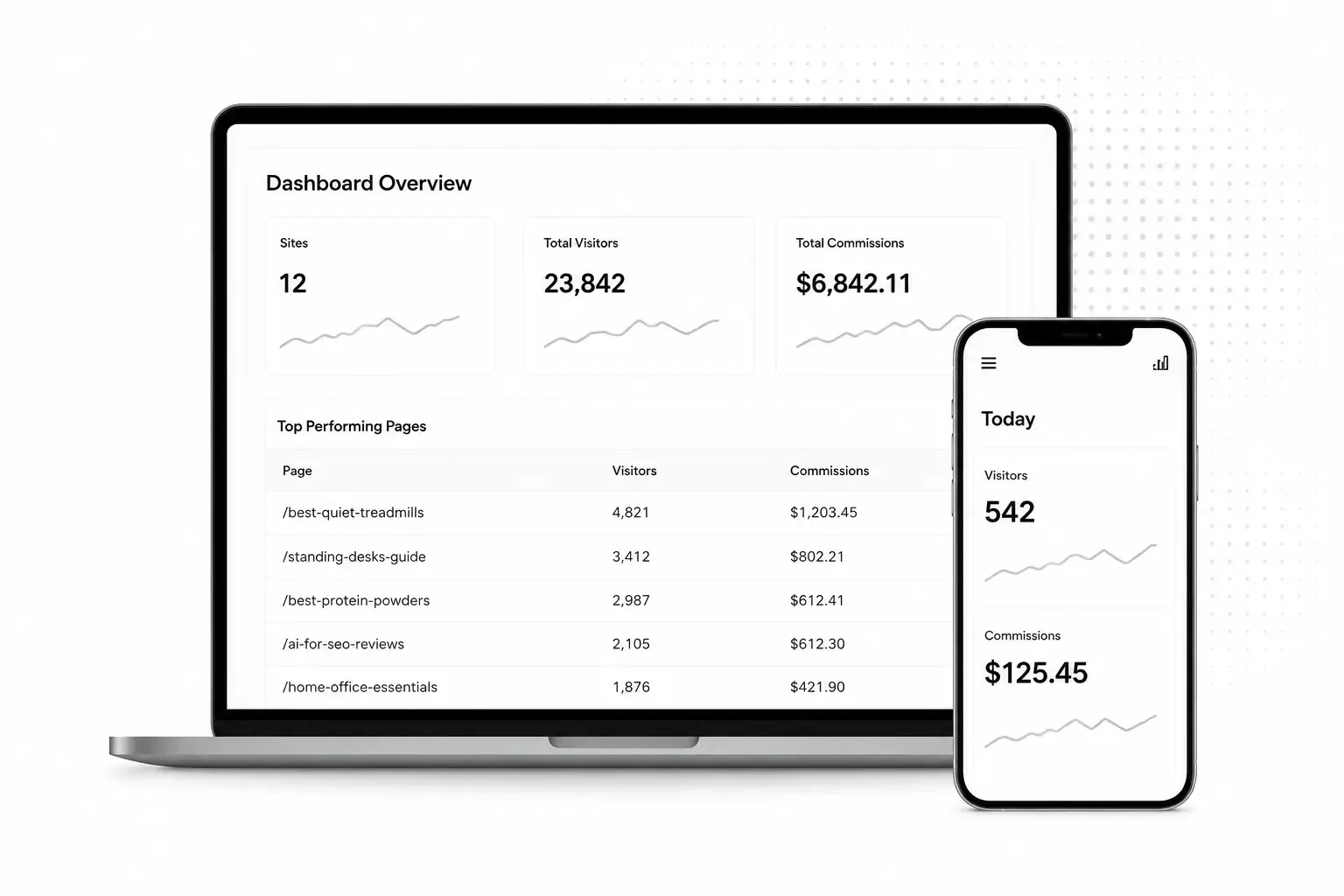
You can't improve what you don't measure. Google Analytics gives you traffic data, but you need to connect it to affiliate earnings to see what is actually working. I track clicks and conversions manually in a spreadsheet, then cross-reference with SEMrush for keyword positions. Over time, patterns emerge. Certain types of content, like "best of" lists and side-by-side comparisons, consistently outperform single-product reviews. I now focus 80% of my effort on those formats.
Ahrefs is also useful for monitoring backlinks. A single link from a high-authority site can push a page from page three to page one. When I see a new backlink, I check the referring domain and try to replicate that link type for other pages.

The Long Game
SEO affiliate marketing is not a get-rich-quick strategy. It takes months to see real results, and the first year is often the hardest. But once you cross that threshold, the compounding effect is real. Pages you wrote a year ago are still earning while you sleep. That is the kind of passive income that scales without scaling your effort.
If you are considering this path, my advice is simple. Pick a niche you know something about, write content that genuinely helps someone make a decision, and stick with it long enough to see the payoff. The tools, from Google Analytics to Cloudflare to Ahrefs, are there to support you. But the real work is showing up and writing something worth ranking.